Sunday, October 28, 2012

Current Event 3


Blue Iguana Slithers Back from Extinction

Date: October 22 2012

Summary:   
Only about a decade ago, the Grand Cayman blue iguana was almost extinct: there were only 10-25 of them left in the wild. But today, it is not anymore listed as a critically endangered species. The blue iguana weighs 11 kilograms and is 1.5 meters in length. Deaths related to traffic and stray dogs caused them to become almost extinct.  This iguana, which lives only on the Caribbean island called Grand Cayman now has 750 members. The International Union for Conservation of Nature (IUCN) has helped this species achieve this and now plans to achieve their long-term goal:  restoring at least 1,000 Grand Cayman blue iguanas to the wild. 

This article is connected to what we are learning in science class because we were learning about ecosystems and this current event relates to the ecosystem of the blue iguana. I found this article interesting because I am interested in endangered animals and how to save them from extinction. This article states a very good event because it is good that the blue iguana is not on the brink of extinction anymore and that the number of these creatures get larger and larger! While reading this article I felt very happy to hear that organizations are finally taking action about animals being very near extinction! 

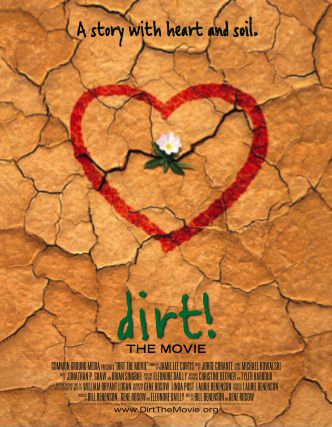
Dirt Movie Reflection

Dirt Movie Reflection


Several people in the film indicate that working in dirt is calming or satisfying. In your experience, is this true? If so, why?


I agree that working in dirt is calming and satisfying because dirt is what the earth is made up of and what plants and trees grow from. Dirt is the real material from which our earth is made from, not concrete.

What is your reaction to hearing about the number of farmer suicides in rural India over the past decade? (The film reports there were 200,000.) If such a thing occurred in this country, what do you think would happen?

This fact made me very sad because their crops don’t grow well enough to get them enough money to live. If this occurred in this country, it would affect the populations in villages and countrysides a lot and the country’s economy would drop.


In the film, mycologist Paul Stamets characterizes the human species as a virus because of the harmful effects our activities have had on the land. Do you accept his analogy? Why or why not?
I accept this analogy because humans did the most damage to our planet. Rainforests now cover less than 2% of the Earth’s surface while they used to cover 14%.

How can humans “listen to nature” and bring their needs and activities into alignment with those of nature? Are there ways you can be more attentive to the natural world in your daily life? How?
We can spend more time in nature in order to understand it and to help nature we can recycle, treat animals kindly, throw our garbage into garbage/recycling bins, not around our city.

Keeping in mind the hummingbird story told in the film, do you think doing the best you can is enough to preserve the health of the planet, even if millions of people do their best? What responsibility do governments have to help maintain a healthy planet for future generations?

I think that if millions of people try their best we can preserve our planet and make it a better place for the future generations. Governments should make more recycling centers and recycling bins in their countries, make strict rules about throwing garbage into nature and make many animal shelters.

What feelings are you left with after seeing this film? Do you feel motivated or empowered to make changes, either personally or as part of a group effort, to keep Earth’s soil healthy? What part(s) of the film especially resonated with you? What did you learn from the movie? How do you feel about dirt(soil) after watching this film? Do you feel that Dirt is really important as the film states?

  
After seeing this film I feel very inspired but sad about what is happening around the world. I feel motivated to make changes in the world to keep the Earth’s soil Healthy. The part of the film with the hummingbird trying its best to stop the fire inspired me the most. From this movie I learned that even though a lot of people might think that dirt is dirty and disgusting, it is not true because dirt is a home to many living organisms and helps farmers grow crops. I feel very differently about dirt after watching this movie because it explained the purpose and importance of dirt and I feel that dirt is very important to humans and other living organisms.

Monday, October 15, 2012

Current Event 2

Venus the Two-Faced Cat a Mystery
August 31 2012
By: Katia Andreassi
http://news.nationalgeographic.com/news/2012/08/120831-venus-two-faced-cat-genetics-animals-science/
A two-faced cat.
Summary:

Venus is is the world's most famous cat. One half of her face is black with a green eye while the other is orange with a blue eye. Many scientists think that Venus is a chimera. According of myths a chimera is a monster that is made up of parts of different animals. A feline chimera is a feline that has cells that contain two types of DNA. Another interesting thing about Venus is her blue eye. Since cats usually have green or yellow eyes and only Siamese cats or white cats have blue eyes which is why nobody knows why Venus has a blue eye. This cat shows how changes in genes mutate a living organism. Also this two-faced cat shows still how much scientists have not yet studied and discovered. 

This article is connected to what we are learning in science class because we just finished the topic of classification and this article talked about a house cat and a house cat is a placental mammal and vertebrate. I    found this article interesting because I never heard of an animal having two types of DNA in a cell and having such a fascinating appearance. I think that Venus, the cat in the article, affects our society in a good way because scientists are studying it and trying to find out what caused her face to be separated into two halves. From this article I learned that usually there is only one type of DNA in a cell but sometimes there are exceptions when a cell has 2 types of DNA and that can cause mutation. 


Friday, September 28, 2012

Current Event 1 - A Marvelous Monkey

A Marvelous Monkey 
By Cameron Keady
September 17, 2012


Summary:
On September 12 scientists have found a new specie of monkeys in Opala in the Democratic Republic of Congo. The new specie was named "Lesula" short for it's Latin name: Cercopithecus lomamiensis. It lives in rain forests throughout Central Africa. The monkey weighs about 5 kilograms and is  about 50 centimeters tall. It's fur is blond and has a white stripe on its nose. The lesula eats mostly fruits and plants so it is a herbivore. This monkey was compared to the Cercopithecus hamlyni (known as the owl-faced monkey) and they saw that the lesula and the owl-faced monkey were similar in size and both had a stripe on their nose. The researchers found out that these two monkeys are relatives but they are not from the same specie. This specie was already known and hunted by hunters in the rain forests and scientists say that while this discovery shows that there is many more species to be discovered it also shows us the importance of preserving our rain forests and the effects of illegal logging and hunting.

This article is connected to what we are learning in science class we are learning about classification of the animal kingdom and the Lesula monkey is a placental mammal and a vertebrate.  I think that this event affects our society in a good way because it is good when scientists discover new species of animals because they can protect them from extinction. I chose this article because it is connected to what we are studiying in class (animals) and because I am interested in animals and how scientists discover them. What I found interesting and surprising about this article is that thie only the second of discovered monkey species in 28 years.


Tuesday, September 4, 2012

Sloths


Here are some amazing facts about sloths: 
Even though sloths are still for most of the day they don't sleep as much as we think they do. They aren't still because they are lazy, or sleep all the time.They move slowly to defend themselves from predators. Their average speed is one foot per minute.

They also aren't closely related to any specie of animals. They evolved in South America when the continent wasn't connected to any others. They evolved from mammals about 75-80 millions of years ago, and their family tree shows a far away relation to armadillos and anteaters. Now they can be located in South and Central America.

A sloth spends most of it's life up in trees so it's food consists mostly of leaves. Because they don't get enough nutrients from leaves their digestive system can digest food up to a month long. 


Sloths in Costa Rica


Tuesday, March 20, 2012

Viruses: Living or Non-Living

I think that viruses are living because even though they are much, much smaller than bacteria are they still can go into to organisms and cause sicknesses and they can move and reproduce. But, to reproduce and live they depend on other oraganisms wether its an animal, plant or even bacteria. They get into a closed membrane of a cell in a living organism The debate of wether a virus is living or non-living has been going on for a long time in science an right now the answer is somewhere in the gray space in between living and non-living.

Thursday, March 15, 2012

How muscle cells seal their membranes: Current event


How muscle cells seal their membranes
By:  Helmholtz Association of German Research Centres
Date Published: March 14 2012
Every cell has a thin double layer of lipids (which is also called the plasma membrane) to protect and separate the insides of the from the cell outside the cell. If damage is done to the plasma membrane the cell might die. For example, when you walk down hill many small holes are made in the plasma membranes of your muscle cells. But to prevent death the muscle cells have a special way of sealing themselves closed.  Karlsruhe Institute of Technology (KIT) and Heidelberg University were the first to observe this happening in a live organism. Prof. Uwe Strähle and Dr. Urmas Roostalu were observing this happen in the muscle cells of a zebra fish larva.  The scientists made tiny holes in the zebra fish larva’s muscles with lasers and observed what would happen next under that microscope. The Dysferlin and Annexin A6 proteins quickly form together to repair the damaged membrane. Other Annexins accumulate the membrane. These studies say that the muscle cell has a multilayered repair patch and the inside membrane just peels off.  This study will contribute to finding new proteins and can open up new possibilities in biotechnology.

This article is connected to what we are learning about in science class because right now our topic is cells, bacteria, viruses, fungi and microscopes and this article talked about muscle cells. I found this current event on http://www.biologynews.net and it was the first one on the page. The title of article looked quite interesting to me so I decided to read more. I thought that this article was very interesting because this article explains about how muscle cells are unique from other cells and how scientists find out new thing everyday which might lead to new inventions. I felt very interested to read on while I was reading this article because it was written in an exciting way. I think that this article taught me many new things: that muscle cells are unique from other cells and how their membranes are repaired with proteins.